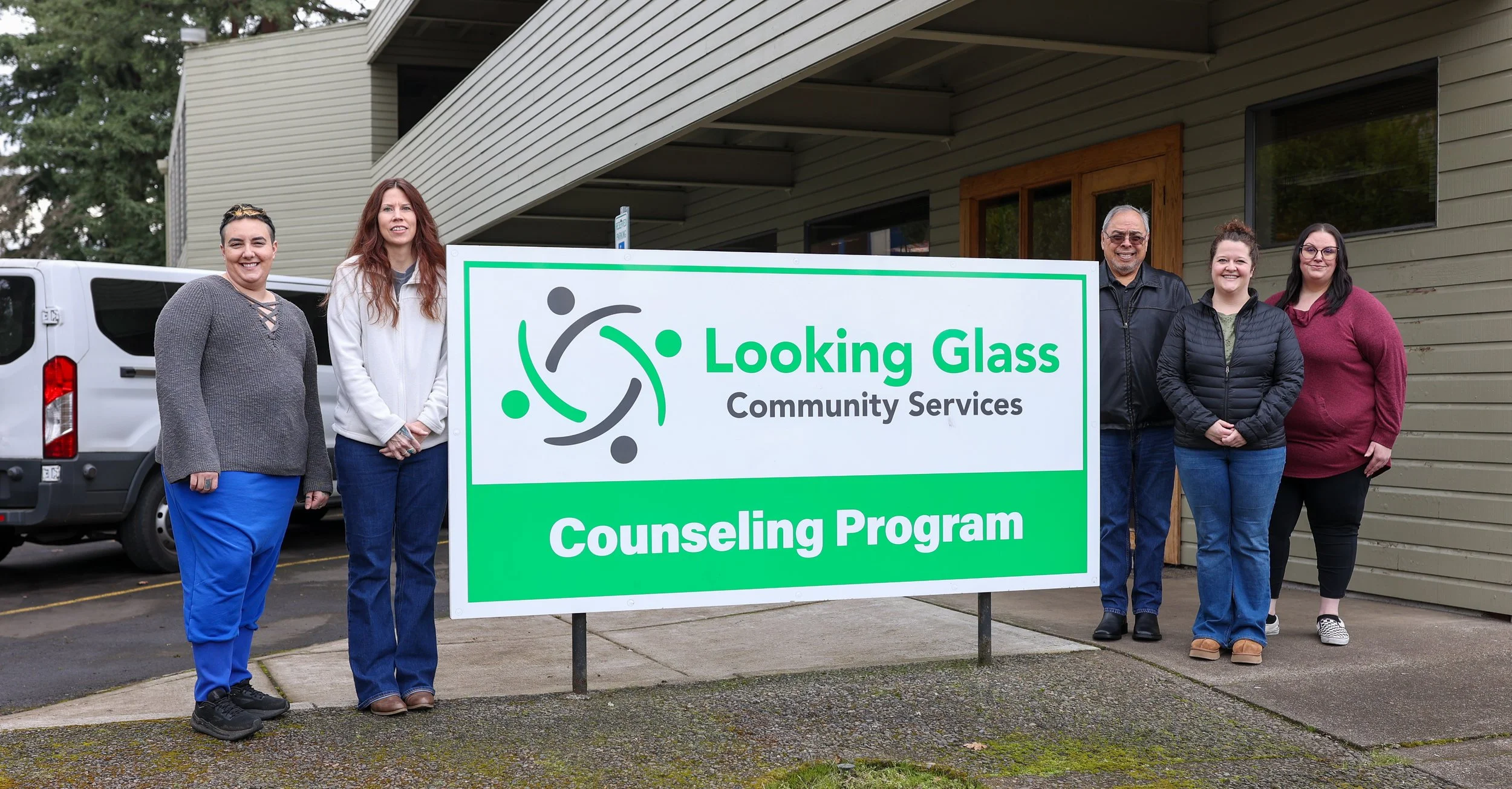
Looking Glass Counseling AOD therapists in front of the main Counseling program building on East 11th in Eugene.
Looking Glass has several experienced certified alcohol and drug counselors (CADC) working within the Counseling Program who assist youth between the ages of 13 and 24 with assessment and outpatient treatment programs tailored to the needs of each youth client. These CADCs do an initial assessment to determine the level of need and develop individualized treatment goals. Most commonly, services involve weekly sessions focusing on harm reduction, identifying triggers, and helping navigate social environments which can often be difficult for young people to handle on their own.
Looking Glass also has a Peer Support Specialist on staff who can support the youth alongside the CADC. By drawing on shared lived experiences, the Peer Support Specialist is able to offer unique perspectives focusing on enhancing well-being, creating connections to community, and gaining increased access to resources. This ensures that the client’s needs are being met holistically.
AOD services at Looking Glass take a trauma informed, harm reduction approach to working with clients – meaning the goal is to intervene before more damage is done and the addiction becomes stronger and harder to break. Harm reduction can look like a lot of things but intends to meet the clients where they are at while working towards the ultimate goals of the client or family. Often times going “cold turkey” is difficult and unrealistic so getting the youth to reduce using at first is getting them on the path to a healthier lifestyle.
With many youth receiving AOD services, education is a first step. Learning about substances and addressing common myths about use helps to challenge stigmas and misinformation. In turn, it is aiming to reduce shame, and allow youth to make safer informed decisions about their health and recovery.
“One of our goals is to plant seeds with these youth, providing them real info about addiction and risk factors they may not be aware of,” explains Angie Lukens, Looking Glass AOD Therapist. “For some of them, we just provide the tools so that when they are ready to quit, they know what to do.”
Some of the youth seen for AOD services at Looking Glass have been in some kind of trouble, at school or with their parents, and are seeking services as part of rebuilding trust or reestablishing privileges. To support with this, Looking Glass does provide UA’s (drug and alcohol testing) and often times the youth are the ones requesting testing – in some cases, in order to prove to others they are not using. However, it is important to note that youth do not have to be ready to fully stop using drugs or alcohol in order to access support. Staff can work with youth to increase their readiness, explore pros and cons of use, and start to explore what a reduction in use might look like.
The three CADCs on staff have over 1,000 hours of supervised training and are required to pass a test with the mental health addiction certification board of Oregon. Looking Glass has immediate openings and availability to see clients with alcohol and drug dependency issues (or otherwise). While there are currently no group services, the AOD therapists hope to be able to start them soon.
“We have the ability to work with the youth early on – there are two paths they can go down in the early stages of addiction – we hope to help steer them down the path of success and avoid the other path,” Looking Glass Counseling Program Assistant Director Jeanette Weiler explained. “We want to help them improve family relationships that this addiction can really damage. Our services help heal families.”
To learn more about these services or to schedule a therapy session – visit our website - https://www.lookingglass.us/counseling or call the Counseling program at 541-484-4428.